George Calvert, David Kirke, and Jim Tuck: three visionaries and their impact on Ferryland, Newfoundland

Please join the Newfoundland and Labrador Archaeological Society and The Rooms for a Coffee and Culture lecture Thursday April 2nd at 2:30 PM by Dr. Barry Gaulton entitled George Calvert, David Kirke, and Jim Tuck: three visionaries and their impact on Ferryland, Newfoundland.

In Dr. Gaulton’s own words:
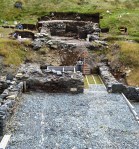
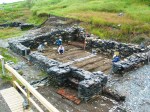
In 1621 Sir George Calvert, the first Lord Baltimore, established a permanent English settlement at Ferryland on the Southern Shore of Newfoundland’s Avalon Peninsula. Less than two decades later, Sir David Kirke gained control of the fledgling town and changed/diversified some of the daily operations in an effort to make it economically viable — changes that largely continued under the direction of his wife, Lady Sara Kirke and their sons. A French attack in 1696 destroyed the entire colony but its remains lay undisturbed throughout the centuries. Starting in the mid-1980s, archaeological investigation led by Dr. James A. Tuck has revealed this amazingly well-preserved seventeenth-century settlement.
This presentation looks at the impact that these three important individuals had (and continue to have) on the past and present community of Ferryland as demonstrated through 25 years of archaeology.

Dr. Gaulton is an Associate Professor with the Department of Archaeology at MUN. His research involves ongoing excavations at Ferryland, Newfoundland, which focuses on George Calvert’s colony of Avalon (1621) and the subsequent plantation established by Sir David Kirke in 1638.

One Hundred and Fifty Years of Prehistoric Art: A History of Paleolithic Images

The Rooms ENGAGING EVENINGS  are every Wednesday evening at 7pm  and consist of tours, lectures, discussions, artist’s talks, films, readings, workshops… Each week has something new – all wrapped up in an hour or two.

Wednesday evening,  April 1st, the Newfoundland and Labrador Archaeology Society and The Rooms are pleased to present Dr. Oscar Moro Abadia who will be speaking on the topic of One Hundred and Fifty Years of Prehistoric Art: A History of Paleolithic Images.

In Dr. Abadia’s own words:
Paleolithic art was first discovered in France in 1864, i.e. one hundred and fifty years ago. In this talk I review the history of the terms and ideas used to conceptualize Paleolithic art since the end of the nineteenth century. In the first place, I show how, during the period 1900-1970, prehistoric representations were typically divided into two main groups: ‘parietal art’ (including ‘rock’ and ‘cave’ art) and ‘portable’ (or ‘mobiliary’) art. This classification gave rise to asymmetrical attitudes towards Paleolithic images. In particular, while a small number of cave paintings were praised for their realism, portable representations were overlooked. In the second place, I examine how during the last forty years archaeologists have developed new frameworks within which more kinds of images can be meaningfully approached and incorporated into the analysis of Paleolithic art and symbolism. I suggest that the emergence of new approaches to Pleistocene imagery is the result of a number of interrelated processes including the globalization of Paleolithic art studies, the impact of new discoveries, and the development of new approaches to art, images and symbolism.

Dr. Abadia is an Associate Professor with the Department of Archaeology at MUN. He is an expert in Paleolithic art with a keen interest in the history of archaeology and science, and its relationship with First Nations and Inuit peoples.