The Community Collections Archaeological Research Project 2015

The NLAS is looking for an existing collection of artifacts to catalog and photograph in the Province. We have funding to hire an archaeologist who will document your collection and compile a report. You can download last year’s report from our website to get an idea of the end result. We return all of the artifacts along with a printed copy of the report to the collector.

If you have a collection that you would like to share and have recorded, or if you have any further questions, please contact the NLAS: nlas@nlarchsociety.ca

We don’t want anyone to go out looking for artifacts, but we understand that sometimes people find them. The Community Collections Archaeological Research Project is a great way to share a piece of your community’s past with the people of Newfoundland and Labrador and to be recognized for your role in helping to preserve it.

The Community Collections Archaeological Research Project 2014

The Community Collections Archaeological Research Project 2014

George Calvert, David Kirke, and Jim Tuck: three visionaries and their impact on Ferryland, Newfoundland

Please join the Newfoundland and Labrador Archaeological Society and The Rooms for a Coffee and Culture lecture Thursday April 2nd at 2:30 PM by Dr. Barry Gaulton entitled George Calvert, David Kirke, and Jim Tuck: three visionaries and their impact on Ferryland, Newfoundland.

In Dr. Gaulton’s own words:
In 1621 Sir George Calvert, the first Lord Baltimore, established a permanent English settlement at Ferryland on the Southern Shore of Newfoundland’s Avalon Peninsula. Less than two decades later, Sir David Kirke gained control of the fledgling town and changed/diversified some of the daily operations in an effort to make it economically viable — changes that largely continued under the direction of his wife, Lady Sara Kirke and their sons. A French attack in 1696 destroyed the entire colony but its remains lay undisturbed throughout the centuries. Starting in the mid-1980s, archaeological investigation led by Dr. James A. Tuck has revealed this amazingly well-preserved seventeenth-century settlement.
This presentation looks at the impact that these three important individuals had (and continue to have) on the past and present community of Ferryland as demonstrated through 25 years of archaeology.

Dr. Gaulton is an Associate Professor with the Department of Archaeology at MUN. His research involves ongoing excavations at Ferryland, Newfoundland, which focuses on George Calvert’s colony of Avalon (1621) and the subsequent plantation established by Sir David Kirke in 1638.

One Hundred and Fifty Years of Prehistoric Art: A History of Paleolithic Images

The Rooms ENGAGING EVENINGS  are every Wednesday evening at 7pm  and consist of tours, lectures, discussions, artist’s talks, films, readings, workshops… Each week has something new – all wrapped up in an hour or two.

Wednesday evening,  April 1st, the Newfoundland and Labrador Archaeology Society and The Rooms are pleased to present Dr. Oscar Moro Abadia who will be speaking on the topic of One Hundred and Fifty Years of Prehistoric Art: A History of Paleolithic Images.

In Dr. Abadia’s own words:
Paleolithic art was first discovered in France in 1864, i.e. one hundred and fifty years ago. In this talk I review the history of the terms and ideas used to conceptualize Paleolithic art since the end of the nineteenth century. In the first place, I show how, during the period 1900-1970, prehistoric representations were typically divided into two main groups: ‘parietal art’ (including ‘rock’ and ‘cave’ art) and ‘portable’ (or ‘mobiliary’) art. This classification gave rise to asymmetrical attitudes towards Paleolithic images. In particular, while a small number of cave paintings were praised for their realism, portable representations were overlooked. In the second place, I examine how during the last forty years archaeologists have developed new frameworks within which more kinds of images can be meaningfully approached and incorporated into the analysis of Paleolithic art and symbolism. I suggest that the emergence of new approaches to Pleistocene imagery is the result of a number of interrelated processes including the globalization of Paleolithic art studies, the impact of new discoveries, and the development of new approaches to art, images and symbolism.

Dr. Abadia is an Associate Professor with the Department of Archaeology at MUN. He is an expert in Paleolithic art with a keen interest in the history of archaeology and science, and its relationship with First Nations and Inuit peoples.


Don Locke

Gerald Penney’s Obituary for Don Locke, 20 January 2015.

Don Locke, Newfoundland’s premier amateur archaeologist, died at his home town of Grand Falls, on 14 January, 2015 in his 76 year. Known to family and close friends as Sonny, he was an avid woodsman, trapper and landscape/wildlife painter. In work life a linesman with Newfoundland and Labrador Hydro he, along with other such dedicated workers, built the provincial electric grid system. However, his real passion was a strong desire to come to a better understanding of the Beothuk and the other pre-and post-contact aboriginal groups on the Island. Readings of J.P. Howley’s The Beothucks (1915) and other early accounts coupled with a keen sense of the natural landscape enabled him to find their campsites and other remains; in many respects following Howley’s footsteps. He created replica Beothuk villages, on the Exploits just outside Grand Falls and at Indian Point on Red Indian Lake. His 1973 inscribed booklet, concerning their sites and artifacts is a prize of my library. His material culture collection was eventually acquired by the Newfoundland Museum. Later in life Don and I undertook a number of exciting surveys of the interior southwest coast and Notre Dame Bay region. Always ready to reveal his deep knowledge of nature and lore he will be sadly missed, especially by Marjorie and three children.

Don Locke, 1985  G. Penney, photo.

Don Locke, 1985
G. Penney, photo.

Call For Nominations!

We are looking for a new NLAS board member!

cropped-1383590_10151623322707511_182314128_n.jpg

At the upcoming Annual General Meeting (AGM) this coming November 12th, our Secretary Sarah Ingram will be stepping down. We are putting out a call for nominations for the position, and the required form is available on the Facebook page. Nominations will be open on October 15th, and must be received by October 22nd to allow voting time (any additional information on nominations, voting, and the duties of the secretary can be found in the constitution).

There will be more information shortly coming out about the AGM and membership renewal soon, so keep an eye on the website, the Facebook page, and on your email if you’re a member.

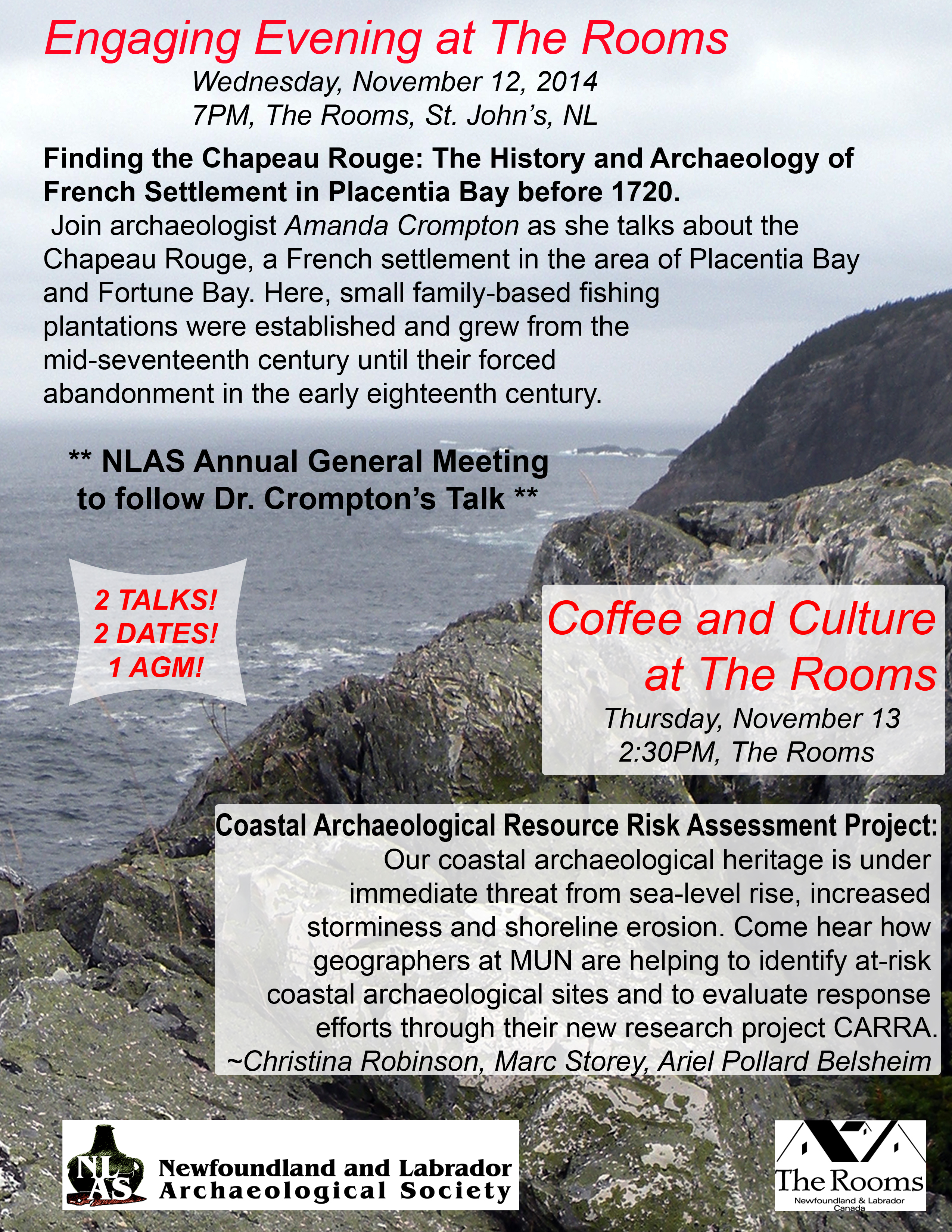
We have a very interesting talk by Amanda Crompton planned for our AGM, and we really hope to see you out there!

– The NLAS Executive

PRESS RELEASE: Archaeological Society Documents Collection of Twillingate Artifacts

FOR IMMEDIATE RELEASE:

St. John’s, Newfoundland and Labrador – September 22, 2014 – While archaeologist Robert Anstey was in Twillingate, visiting home from his PhD studies at the University of Cambridge, he had the opportunity to analyze a very special set of artifacts from the area, his father’s collection.    Robert’s work was a pilot project made possible by the Newfoundland and Labrador Archaeological Society (NLAS).

The Community Collections Archaeology Research Project (CCARP) is an initiative of the NLAS that seeks to bring privately held archaeological collections in the Province out of shoeboxes, closets, and basements and showcase them for everyone in the Province to learn from and enjoy.  The goal is not to encourage the private collection of artifacts, but rather to gain a better understanding of important collections that may not be professionally curated in the Province.   Collecting archaeological objects within the Province of Newfoundland and Labrador is restricted to licensed archaeological investigation under the Historic Resources Act.

Archaeologists lament the loss of context when an artifact is plucked out of a site without recording its relationship with the other artifacts and features surrounding it.   The systematic recording of all of the various complex components of an archaeological site is what separates the professional discipline of archaeology from the keen-eyed artifact collector, but it doesn’t mean that the relationship between archaeologist and collector is an unfriendly one.

In the spring of 2014, the NLAS received heritage funding through the Provincial Government of Newfoundland and Labrador’s Cultural Economic Development Program (CEDP) to hire an archaeologist to work with a private collector to analyze, record, and present a private collection to a wider audience.  The end result is a report and an online gallery of the James Anstey Collection on the NLAS website:

https://nlarchsociety.ca/2014/08/27/the-community-collections-archaeological-research-project/

The James Anstey Collection is a perfect subject to launch CCARP.  Robert Anstey, who earned a BA and MA in archaeology at Memorial University of Newfoundland is the archaeologist selected by the NLAS to analyze the collection.  Robert Anstey is James Anstey’s son.   On one hand, this research is an archaeological analysis of a private collection of artifacts, but on the other hand it’s the work of a son, who has turned his father’s pursuit into a career.  An object without context is just a thing, whether it’s a report or an arrowhead picked up off the ground.  Understanding the context of that thing adds another layer of meaning and turns an object into a story.

Media Contact:

Tim Rast
President, NLAS
nlas@nlarchsociety.ca
PO Box 23065,
St. John’s, NL
Ph: 709-576-4456

Robert Anstey
Division of Archaeology
University of Cambridge
rja73@cam.ac.uk
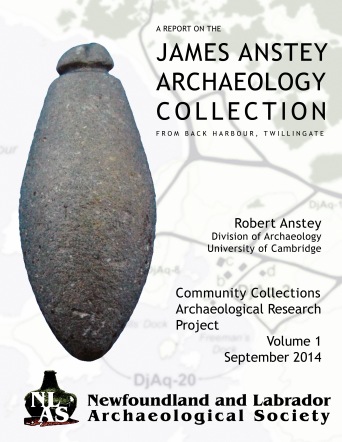
Anstey Report Cover

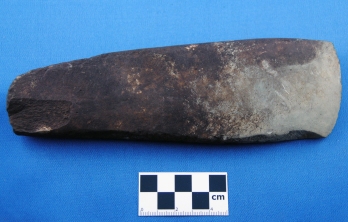
Maritime Archaic Indian axe from Back Harbour-6.

Maritime Archaic Indian axe from Back Harbour-6.

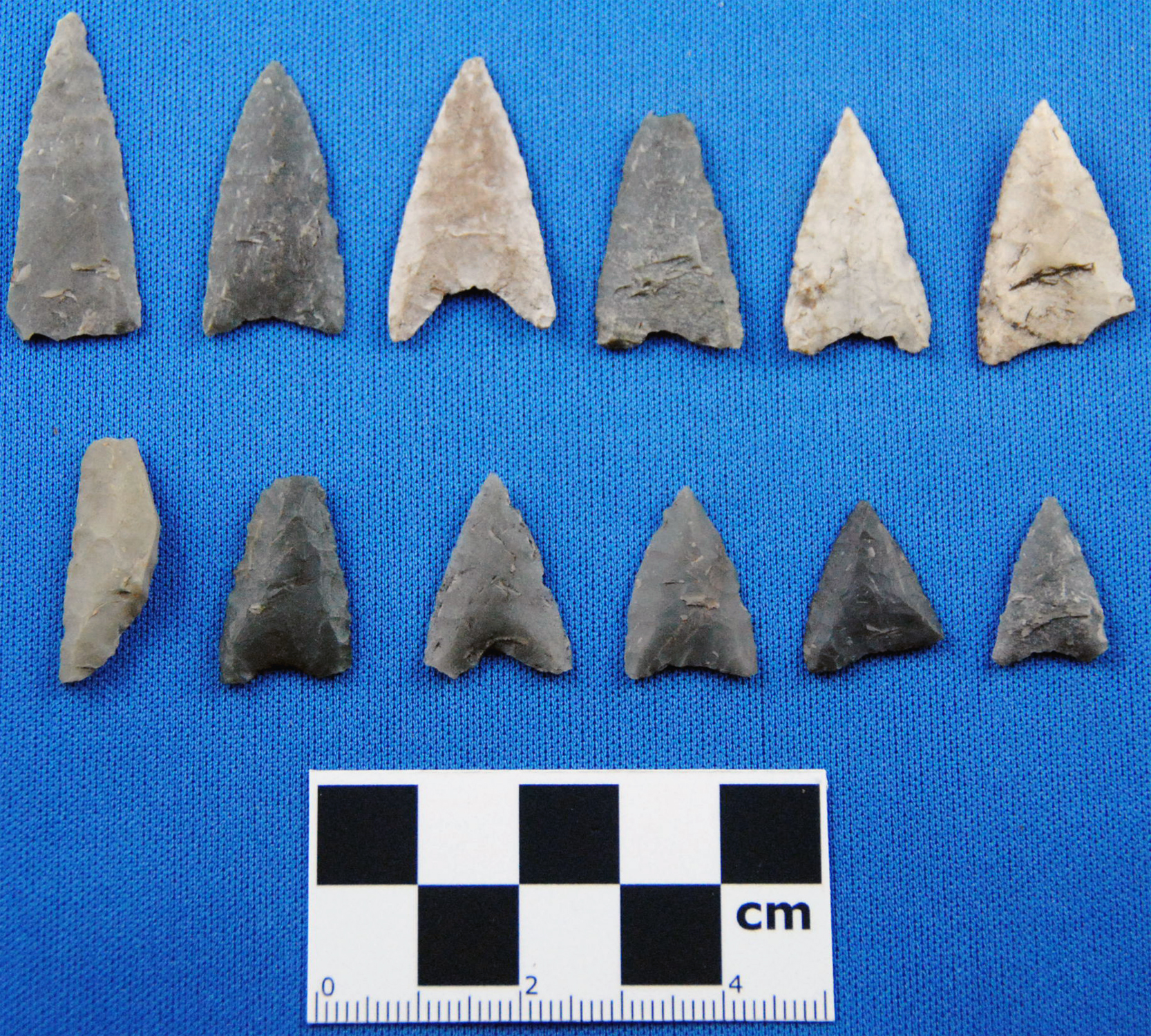
Dorset endblades from the Anstey site.

Dorset endblades from the Anstey site.
The Community Collections Archaeological Research Project

The Newfoundland and Labrador Archaeological Society (NLAS) is keen on engaging with private collectors of archaeological material. Under the recently-developed Community Collections Archaeological Research Project (CCARP) the NLAS hopes to locate and record these private collections as well as facilitate public education and awareness of heritage and archaeological resources. The following photo gallery showcases artefacts from the James Anstey collection from Back Harbour, Twillingate which is the first collection catalogued under this project.

It’s important to note that collecting artifacts is contrary to Newfoundland and Labrador’s Historic Resources Act. With this project, the NLAS does not condone the future collection of artifacts, but rather, it serves as a mechanism which allows existing collections to be shared for educational purposes.

The Community Collections Archaeological Research Project was funded through the Cultural Economic Development Program – Heritage, Department of Tourism, Culture and Recreation. The work was carried out by Robert Anstey, Division of Archaeology, University of Cambridge.

UPDATE

Robert Anstey has completed his analysis of the James Anstey collection from Back Harbour, Twillingate. His report is available here as a PDF.  Thanks to Steve Hull and the Provincial Archaeology Office for the in kind contribution of formatting the report for publication.

The Anstey Site 

This slideshow requires JavaScript.

Back Harbour-3

This slideshow requires JavaScript.

Batrix Island

This slideshow requires JavaScript.

Maritime Archaic Indian axe from Back Harbour-6.

Maritime Archaic Indian axe from Back Harbour-6.

We look forward to future CCARP projects, and if you have a private collection you would like to share with us for this endeavour, please email us at nlas@nlarchsociety.ca

– – – – – – – – – –

Definitions

Plummet: A ground stone weight with incised grooves for attaching a suspension line. Possibly used as a net or line sinker.

Biface: A stone tool with flakes removed from two surfaces.

Preform: An unfinished tool.

Endscraper: A stone tool with a scraping edge made by chipping the end of a flake of stone. Used to scrape animal hides, wood and bone.

End-of-blade scraper: A scraper made from a blade or microblade. The working edge is on the narrow end of the blade.

Concave sidescraper: A scraper with a concave working edge. The working edge is on the long edge of the tool.

Endblade: A small pointed flaked stone tool used to tip harpoon heads.

Dart: Similar to an endblade but with two or more side notches. Possibly used in bird hunting.

Microblade: A small thin flake with parallel sides removed from a core.

Core: A chunk of stone from which flakes are removed during tool manufacture.

Burin-like tool: A flat ground nephrite or silicified slate tool used for graving, scoring or planing hard organic materials like bone.

Abrader: A stone tool with abrasive qualities used for grinding, sharpening, or shaping other stone tools.

Adze: A stone woodworking tool with one end ground down to a sharp working edge. The working edge is set at a right angle to the handle. These tools usually have a flat cross-section.

Axe: Similar to an adze but the working edge is parallel with the handle. These tools usually have a triangular cross-section.

Celt: A thick ground stone woodworking tool. It may have been used as an adze or axe.

Gouge: A ground stone woodworking chisel with a concave working edge.

Bayonet: A long ground stone projectile point that may have been used for marine mammal hunting. These tools are often found in burials.

Hammerstone: A hard stone used as a hammer during tool manufacture and other activities. One or both ends usually show evidence of battering.