JOB POSTING – EXTENDED DEADLINE CCARP 2015

JOB POSTING – EXTENDED DEADLINE

In order to complete the 2015 project the NLAS is looking for a graduate student in archaeology or someone with equivalent experience who is willing to work for us and analyze a collection of pre-contact lithic artifacts from the Bonavista Bay area. We would prefer if the applicants had some Public speaking experience and a comfort with the media (print, radio, tv). Priority will be given to archaeologists who are early in their career. The project will run from November 30, 2015 to March 1, 2016. Salary is based on 15 days work at $15/hr. Travel, accommodation, and a per diem are covered for a two day return trip from St. John’s to Lumsden, NL. Please see the attached PDF Terms of Reference for details.

LETTERS OF INTEREST along with a CV and REFERENCES are to be submitted by e-mail by 4 p.m., November 23, 2015 to:
nlas@nlarchsociety.ca

NLAS Symposium & 2015 AGM

On November 5, the Newfoundland and Labrador Archaeological Society held a symposium in honour of the 100th anniversary of James P. Howley’s book, “The Beothucks or Red Indians”.  Our keynote speaker for the evening was Mr. Gerald Penney who presented a lecture entitled James P. Howley, “the birth of Newfoundland archaeology, and the end of history” (PDF). After his presentation the NLAS had a discussion on the book and the role it has played in our understanding of the Beothuk. The NLAS gathered some of the foremost Beothuk research specialists in archaeology, history, and historic site tourism, to discuss the contributions that this volume has made to our understanding of the Beothuk people and culture. This portion of the evening was hosted by Dr. Donald Holly. The whole event was recorded and is now available on our YouTube channel.

Symposium Poster

This slideshow requires JavaScript.


The Dirt on Your Directors: Lori White

Since the current Board of the NLAS is also its first formal Board and there is an AGM coming up in November where many of these people will be replaced, we thought it would be interesting to get each board member to answer a series of questions about themselves and their role with the NLAS. Over the next few weeks we will post each board members response to those questions. The final director in this series is Lori White who is the NLAS Treasurer and Finance Committee Chair.
Excavating on northwestern Baffin Island (Marc Pike).

Excavating on northwestern Baffin Island (Marc Pike).

  • What sort of things do you do as the Treasurer and Finance Committee Chair?

As the Treasurer I oversee the financial health and transactions of the NLAS. I am the first person to hold the Treasurer position so much of my work has focused on laying the groundwork for the organization along with my fellow Board members. My tasks include setting up and managing our banking and financial accounts, as well as handling donations, project funds, and membership fees. The Treasurer is also responsible for working with the Board to prepare budgets and reports to meet deadlines by various internal and external agencies.

Along with my fellow Finance Committee members, Elaine Anton and Chelsee Arbour, one of our biggest goals was finally attained in August 2015 when the NLAS became a Registered Charity with the Canada Revenue Agency (woohoo!). So starting next year we can add ‘filing an income tax report’ to the list of duties to the Treasurer’s agenda.

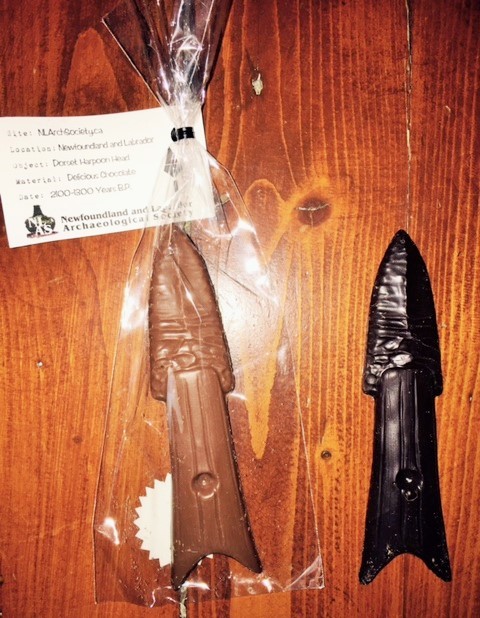
Special projects closely overseen by the Treasurer and Executive include operating the Bookroom at the 2015 Annual Meetings of the Canadian Archaeological Association (CAA) in St. John’s this past spring, and partnering with the CAA to design and produce a chocolate artefact mold. We introduced the ‘NLAS Chocolate Dorset Harpoon Head’ at the CAA meetings in May and they continue to be a successful fundraising product for the NLAS (limited stock still available for $3 each, or 2 for $5; milk or dark chocolate!).

NLAS chocolate Dorset harpoon head. Milk or dark chocolate (Lori White).

NLAS chocolate Dorset harpoon head. Milk or dark chocolate (Lori White).

While the day-to-day duties for Treasurer may seem boring to some it’s been incredibly rewarding to see our membership grow and our committees successful in our funding applications so that we can offer our membership and the public more archaeology programming and special events.

  • What was the most interesting site you have worked on?

I don’t have a favourite site but I have a favourite type of site. I’m most excited about sites focused on founder populations. What circumstances brought the first people to this region? This continent? This island? How did they transport themselves here? Where did they come from? How big was their group? Did they arrive in search of resources, or introduce non-native species? Why did they stay? In some cases, why did they leave or disappear? The sites I’ve personally worked on have all been coastal – Tonga, Fiji, and Baffin Island, with some brief experience on Prince Edward Island and in Labrador. My favourite field seasons have been spent answering some of the above questions alongside a team of multi-disciplinary peers and they’ve been some of the most memorable experiences of my life.

  •  If you could give yourself one piece of advice to help you along your archaeology path, what would it be?

Get your hands dirty and join an archaeology field project! Whether you are a student wanting to major in archaeology, or someone who simply has an interest in archaeology and travel, there are dozens –if not hundreds– of opportunities around the world to register or volunteer to gain archaeological fieldwork experience as part of your education, hobby, or even your vacation.

A dig will help you gain the skills required to excavate an archaeological site. Field schools offer students an opportunity to find out what they do/don’t like about fieldwork and artefact processing. It’s what cinched the deal for myself and many of my friends and colleagues; it’s where they decided they wanted to continue with active fieldwork to become research or commercial (cultural resource management) archaeologists, proceed with graduate school, become archaeology instructors/professors, technicians, collections managers, curators, and conservators. For laypersons interested in gaining a rich cultural experience while visiting a new destination, or exploring local excavations in areas that offer such programs, the hands-on experience you earn by joining an archaeology dig can be both exciting and rewarding.

I realize fieldwork opportunities often come with a price tag and it’s not always an option for everyone. It would be great to see the NLAS offering a local public archaeology dig program to our members in the future.

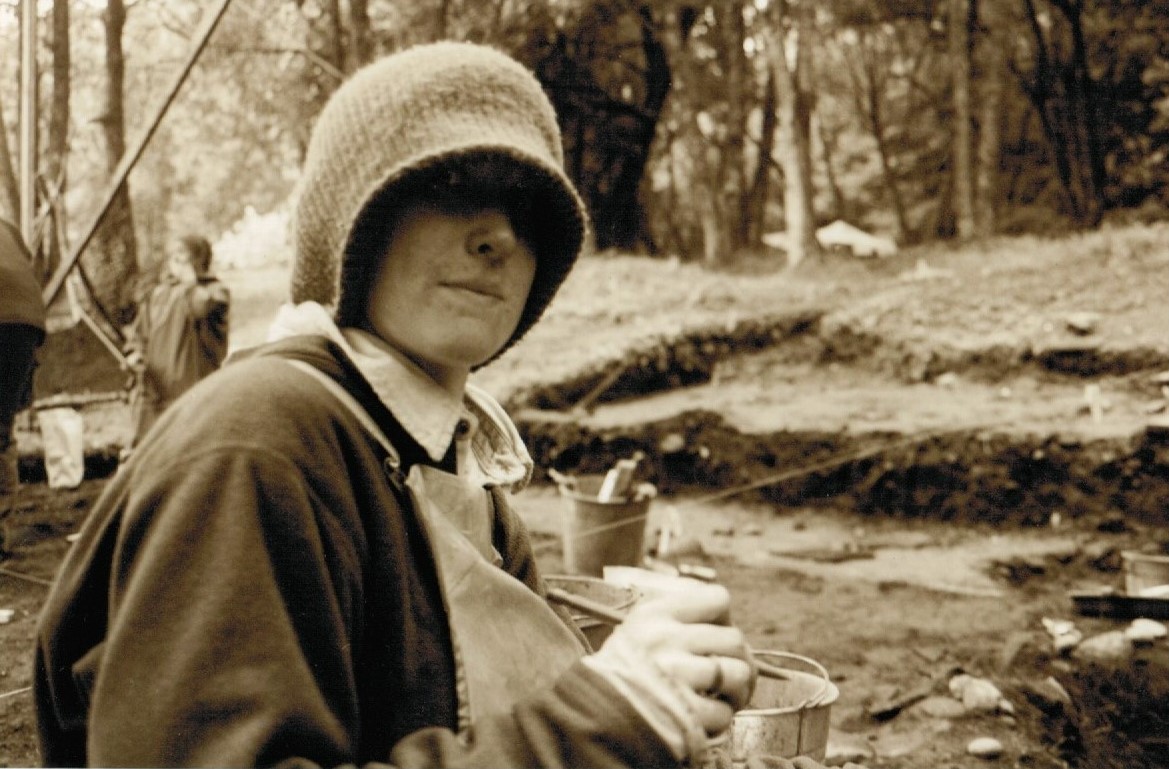
Getting dirty on a Northwest Coast fieldschool in Scowlitz, BC.

Getting dirty on a Northwest Coast fieldschool in Scowlitz, BC.

  • When I think about the future of the NLAS, I hope…

The organization continues to grow in membership and enthusiasm so we can implement and expand our huge wish-list of projects and programming; including dig programs, awards, research assistant-ships, field trips, public lecture series, conferences, student internships, a full chocolate box of NL artefact types, and community partnerships… to name just a few.

I also hope the NLAS is around long enough that no one will remember what a pain it was to obtain our Registered Charity status.

The Dirt on Your Directors: Corey Hutchings

Since the current Board of the NLAS is also its first formal Board and there is an AGM coming up in November where many of these people will be replaced, we thought it would be interesting to get each board member to answer a series of questions about themselves and their role with the NLAS. Over the next few weeks we will post each board members response to those questions. Up next is Corey Hutchings, a member of the Board of Directors.

  • How did you get interested in Archaeology?

I have the opposite story of most of the professional archaeologists that I have met. With few exceptions most of my colleagues say that they went to university with an entirely different profession in mind and happened across an archaeology course and got hooked. I on the other hand always liked reading about the past and came straight from high school with an interest in archaeology/history. In fact I was lucky enough to participate in a cooperative learning program in grade 12 that let me spend my afternoons at the university working with archaeological materials.

  • Do you have a favourite site or artifact from the Province?

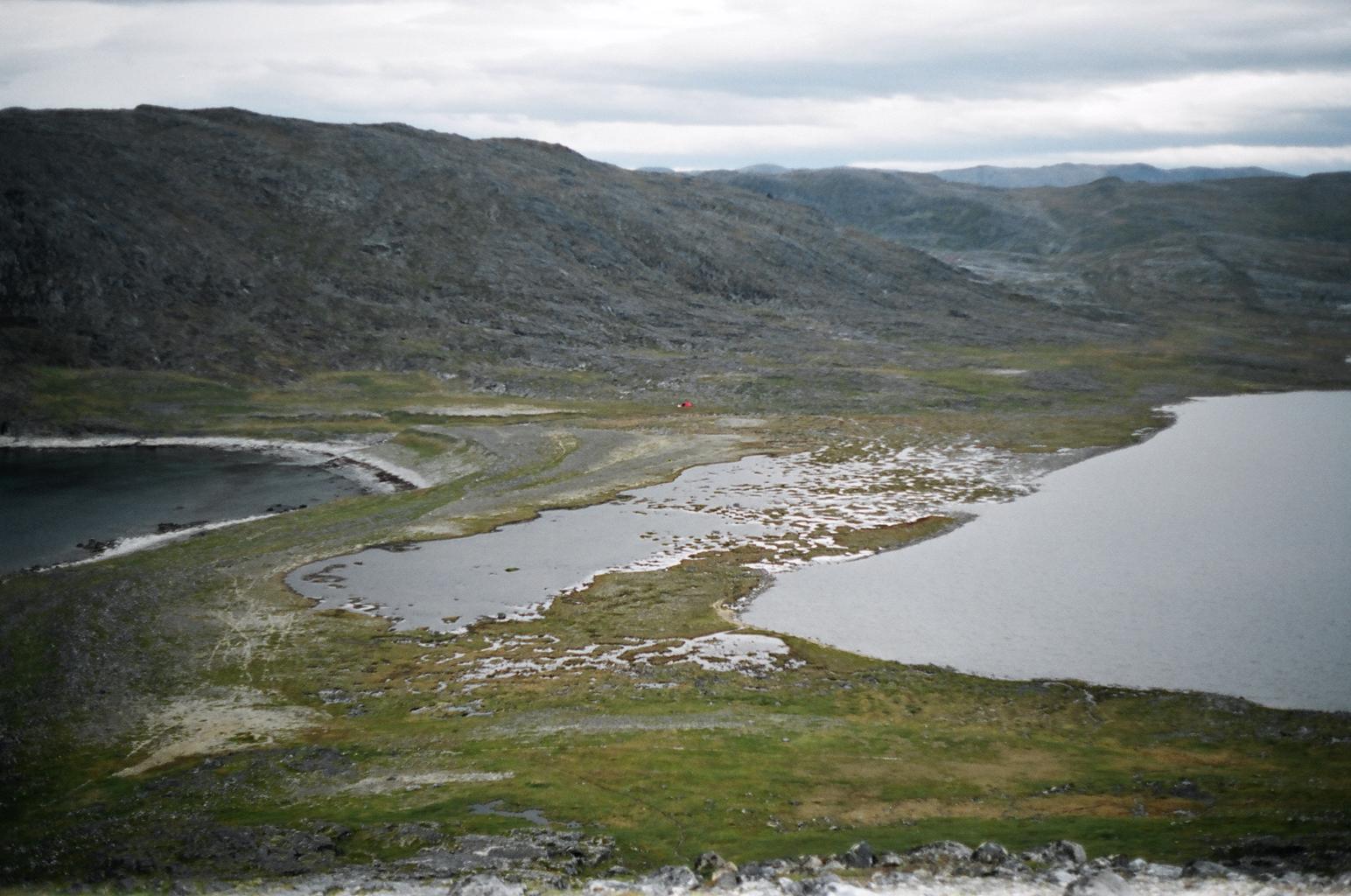
Nulliak Cove!!! Nulliak Cove, Labrador is the location of one of the largest Labrador Archaic sites in the province and the site consist of a series Archaic longhouses as well as structures and features from nearly all the cultures that have lived in Labrador. I have visited the site twice, once to surface collect artifacts and for a second visit for my Masters field work in which I mapped and identified undocumented longhouses. The site itself is amazingly beautiful, with large hills encompassing a high beach and the inland pond. Nulliak has an important place in the history of archaeological work in the province with site visits taking place for over 50 years. Despite this long history only superficial excavation of the site has been completed. I hope to have the opportunity to work there again in the future; barring that it would be fantastic to see other researchers take up an interest.

105_23A

The Labrador Archaic site of Nulliak Cove.

  • What was the most interesting artifact(s) you found?

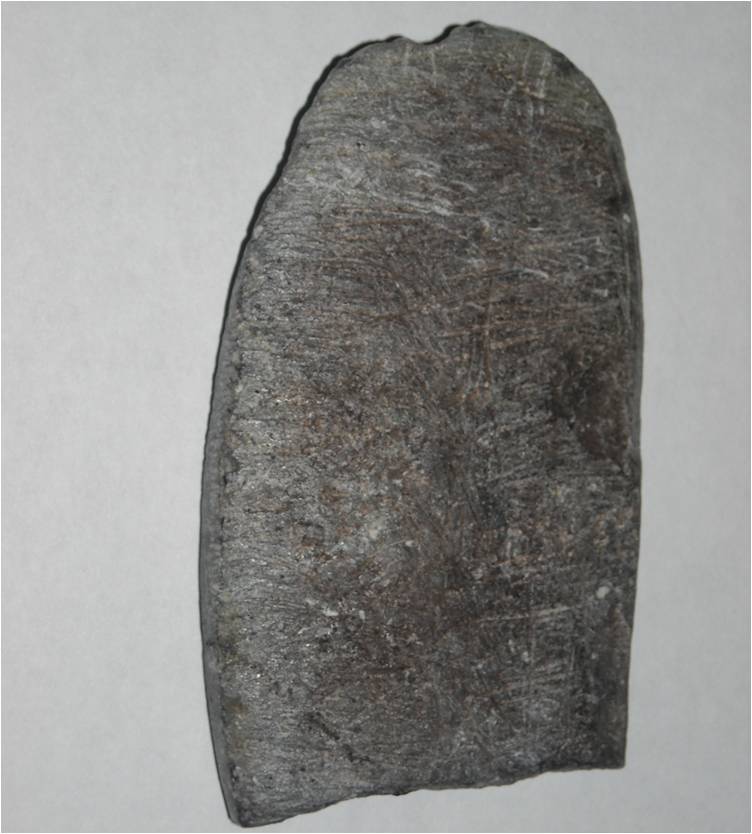
The most interesting object that I have personally found is a soapstone plaque I surface collected from Nulliak Cove. Since the beginning of my work in archaeology I have wanted to recover a piece of “art” a carving or etching etc. This piece is the closest that I have ever come; it is a very plain ground piece of stone 15cm in size with a very fine etching that can be seen on one surface. The pattern is very faint and open to interpretation, which I think makes the object more interesting. As I see it the etched lines form a series of points at different heights across the whole of the object. These could represent anything from the profile of the Nulliak’s surrounding hills to a map of points along the coast or they may be completely abstract. That there are multiple possible explanations of this small piece represents a lot of archaeology in that there are so many questions to answer and so many ways to interpret the available data.

The soapstone plaque.

The soapstone plaque.

  • In your opinion, what is the one thing that no archaeologist should be without?

The ability to tell a story. Being able to tell the story of the people you are studying is incredibly important. I think too often the fact that we are working with peoples personal histories is forgotten, being able to use the facts that we discover to tell their story is the most important part of what we do. Add to this that I think archaeology really works best as a collaborative activity and the more people share and talk about what they are working on the better the overall outcome. Some of my favourite stories come from archaeologists talking about field work and often times you get a real sense of how dedicated people are to getting to the story of people they are studying.

One of my favourite archaeology stories happened while I was working for another NLAS board member at White Point, Labrador. We had experienced some of the worst weather possible resulting in our kitchen tent being demolished in a wind storm. After days of pouring rain and no real way to prepare warm food the Field Director had managed to find a crack in a cliff that the two of us were able to cover in a tarp so we could get a stove going. The first thing we did was make a pot coffee which we promptly drank, we then set to work making a second pot of coffee which we also drank. After 10 cups each of some of the worst coffee ever made which we drank in a freezing dripping wet cave he turned to me and said “You know a month ago I was drinking coffee at Starbucks.”

The Community Collections Archaeological Research Project 2015

The Newfoundland and Labrador Archaeological Society (NLAS) is keen on engaging with private collectors of archaeological material. Under the Community Collections Archaeological Research Project (CCARP) the NLAS hopes to locate and record these private collections as well as facilitate public education and awareness of heritage and archaeological resources.

In order to complete the 2015 project the NLAS is looking for a graduate student in archaeology or someone with equivalent experience who is willing to work for us and analyze a collection of pre-contact lithic artifacts from the Bonavista Bay area. We would prefer if the applicants had some Public speaking experience and a comfort with the media (print, radio, tv). Priority will be given to archaeologists who are early in their career. The project will run from November 23, 2015 to March 1, 2016. Salary is based on 15 days work at $15/hr. Travel, accommodation, and a per diem are covered for a two day return trip from St. John’s to Lumsden, NL. Please see the attached PDF Terms of Reference for details.

The Dirt on Your Directors: Tim Rast

Since the current Board of the NLAS is also its first formal Board and there is an AGM coming up in November where many of these people will be replaced, we thought it would be interesting to get each board member to answer a series of questions about themselves and their role with the NLAS. Over the next few weeks we will post each board members response to those questions. Up next is Tim Rast, President of the NLAS.

  • What sort of things do you do as the President of the NLAS?

As the President, I get to help with all aspects of the Newfoundland and Labrador Archaeological Society.  I set the agenda and chair meetings of the Executive Committee and the Board of Directors, which are scheduled on alternating months throughout the year.  I’m tasked with speaking on behalf of the NLAS when dealing with the media or other organizations.  That means that I’m on the teams of people that apply for funding, plan the direction of the NLAS, organize events, write reports, and communicate with the public. I’m very proud to be the first president and a founding member of the Newfoundland and Labrador Archaeological Society.  Alas, my two years are up.  Next year I’ll be the Past President and will help the new President lead the NLAS in every way that I can.

Tim at work on Baffin Island, Nunavut. Photo by Marc Pike.

Tim at work on Baffin Island, Nunavut. Photo by Marc Pike.

  • In your opinion, what is the one thing that no archaeologist should be without?

I think it’s impossible to be a good archaeologist without a well developed sense of empathy.  Empathy is defined as the ability to identify with or understand another’s situation or feelings.  When trying to understand a foreign or past group of people I believe that an archaeologist needs to be the sort of person who will make every effort to overcome their own biases and see the world from the perspective of the people that they are trying to understand. In practical terms, this means getting out into nature, experimenting with ancient technologies, and if you are not a descendant of the people you are studying, then listen to the folks who are.   Archaeology is not a solo pursuit.   An empathetic archaeologist will make a more likable and easier colleague to work with in an isolated field camp, a crowded laboratory, or on a committee.  Empathy is the one thing that every archaeologist needs in order to be good at their job of interpreting the past and to be the sort of pleasant person that other people will want to work with again.

  • What made you want to get involved with the NLAS?

I saw the benefit of provincial archaeological societies in other parts of Canada, especially Alberta and Saskatchewan, and felt that Newfoundland and Labrador was missing out by not having a society of our own.  Growing up in southern Alberta, my first exposure to archaeology was by becoming a member of the Archaeological Society of Alberta and attending lectures and volunteer opportunities that they organized.  There are well established archaeological entities here in Newfoundland and Labrador affiliated with the Provincial Government, Memorial University, and individual communities. These organizations do a fantastic job of protecting and promoting archaeology in the Province.  I wanted to be involved with the NLAS to help share those contributions with as wide an audience as possible.  Newfoundland and Labrador has an exciting archaeological past and I wanted to be a part of telling it’s story.

Hant's Harbour 047

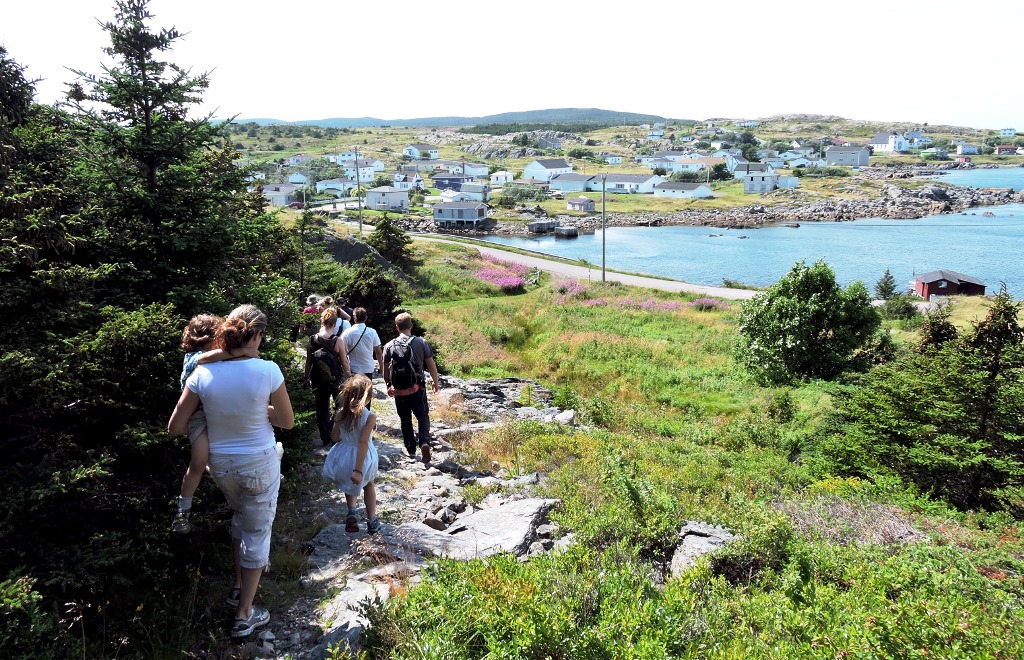
NLAS Fieldtrip to Hant’s Harbour. Photo by Tim Rast.

  • When I think about the future of the NLAS, I hope………

I hope that it is around for a long, long time. I hope that it succeeds in informing all curious Newfoundlanders and Labradorians about the thrilling archaeological discoveries that are happening all around us.  I hope that all students, professional archaeologists, and interested members of the public will become members of the society and that the NLAS provides them with meaningful opportunities, information, and dialogue about our shared interest in the past.

NLAS08

REJECTED NLAS Logo concept. Reason: Too much cowbell.

The Dirt on Your Directors: Anita Kora

Since the current Board of the NLAS is also its first formal Board and there is an AGM coming up in November where many of these people will be replaced, we thought it would be interesting to get each board member to answer a series of questions about themselves and their role with the NLAS. Over the next few weeks we will post each board members response to those questions. Up next is Anita Kora, Chair of the Events Committee.

  • How did you get interested in Archaeology?

Egyptology! Cliche or not, I was interested in cultures of the deeper past because of the expressive and well studied culture of Ancient Egyptians. At some point, however, I began to think ‘hey, what about my people’s history?’ Throughout my (extended) post-secondary education, I dabbled in many disciplines, but it was two things that really got me hooked. The first was a one day trip, mapping Inuit sod houses composed of whale bone and grown over with sod on Sallikuluk, that instilled in me a desire to understand Inuit history. It was amazing standing in a place which was featured in legends and stories like that of Sikuliatsiujiutuk (the giant who kept stealing everyone’s food). The second was taking an anthropology class. While this wasn’t exactly what I wanted, it motivated and inspired me to move to St. John’s to begin archaeology.

Sallikuluk, 2009, A. Kora.

Sallikuluk, 2009, A. Kora.

  • Do you have a favourite site or artifact from the Province?

During fieldwork in 2013, the crew went exploring on the western side of North Arm, Saglek Fiord, northern Labrador. Several burial cairns and caches dotted the hillside and I saw my first soapstone pot within the context of a disturbed site. It was one of several items moved from its original context due to a rock slide. It is one of my favourite artifacts and remains where it was found.

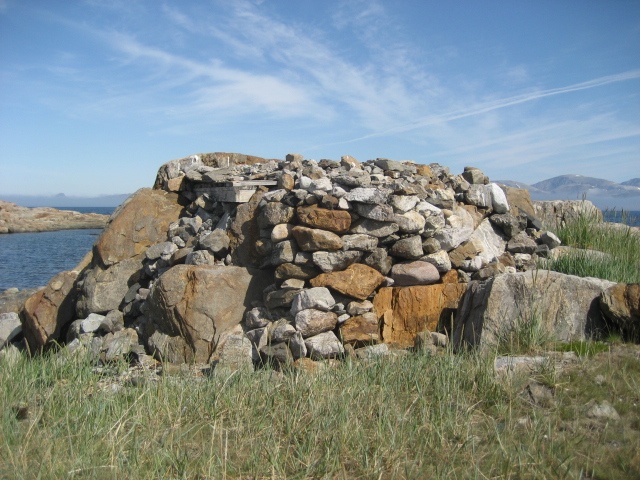
North Arm, 2013, A. Kora.

North Arm, 2013, A. Kora.

  • What was the most interesting site you have worked on?

For a site, I can’t say most interesting because there are so many, but the most privileged place I have been able to work on would be Sallikuluk (Rose Island), Saglek Bay, northern Labrador. This place holds a deep importance to the history of Inuit and many other peoples which have resided there. It is a place of immense value – expressed by the many successions of families of various peoples who have lived there. In the 1970s, 113 Inuit were removed from their final resting places at Sallikuluk and Upernavik. These individuals were returned but placed within a mass grave. This greatly disrespects Inuit beliefs about the afterlife. So, Sallikuluk, as it is with many archaeological sites, is a place of lessons. To teach us as archaeologists that when we encounter burial sites that these were human beings with their own sense of place and identity; that we must take care when excavating and be honest and truthful; and that we must give respect to those we find and when we are done to continue to let them on their journey in the afterlife. We have archaeological methodology on how we excavate and treat human remains, but it doesn’t mean we cannot and should not be respectful of cultural traditions or practices. Where possible, as should have been the case for Sallikuluk, working with descendents if they are present should be common practice, to ensure the individuals we find are treated in the manner which respects them most.

Mass Grave, Sallikuluk, 2009, A. Kora.

Mass Grave, Sallikuluk, 2009, A. Kora.

  • If you could give yourself one piece of advice to help you along your archaeology path, what would it be?

I kept an advice list written by Makere (Margaret) Rika-Heke – a Maori archaeologist from New Zealand, from the chapter Haere Tika Tonu AtuKeep Going Forward (2012) on my person. It reads:

Advice for Indigenous People Pursuing Archaeology

  1. It will be a hard road to travel and on occasion you will falter.
  2. Try to stand strong and walk tall.
  3. Do not bow to the antagonism of others, and do not let your voice be drowned out.
  4. Silence will cripple you and eat at your soul, so be the mouthpiece and the tool.
  5. Maintain your dignity and keep your word.
  6. Remember that you are not alone, that your ancestors walk beside you. In times of despair, do not lose heart. If they had the strength to survive colonisation, then you have the fortitude to see things through.
  7. Don’t let others project labels onto you. Be your own person and develop all sides of your person.
  8. Try not to forget your indigenous self. To step into the future you must look to the past.
  9. View education as a tool, embrace it, and arm yourself, so that you can be an intellectual warrior for your people.
  10. Be active, and not a passive bystander. Have the courage of your convictions. The sheer fact that you exist is a powerful form of resistance in itself.
  11. Ignore the slights and the humiliations; they are merely tests of character and heart. When you feel marginalised and alone, just know that you are not the first to have felt so.
  12. When all is said and done, remember your humility, respect, honour, integrity, and your word.
  13. Lastly, actions speak a truth louder than words, so tread carefully.

    Silluak (North Arm), Saglek Fiord, northern Labrador, 2013, taken by Peter Whitridge.

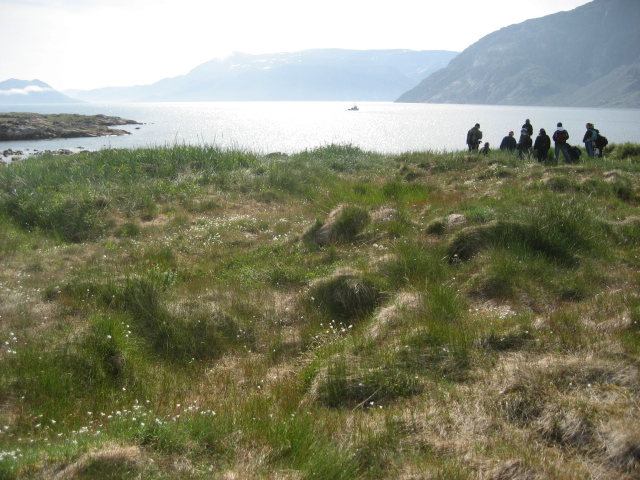
    Silluak (North Arm), Saglek Fiord, northern Labrador, 2013, taken by Peter Whitridge.

Citation:
Rika-Heke, Makere (Margaret)
2012 Haere Tika Tonu Atu – Keep Going Forward. In Being and Becoming Indigenous Archaeologists, edited by George Nicholas, 267-276. Left Coast Press, Walnut Creek, California.

The Dirt on Your Directors: Chelsee Arbour

Since the current Board of the NLAS is also its first formal Board and there is an AGM coming up in November where many of these people will be replaced, we thought it would be interesting to get each board member to answer a series of questions about themselves and their role with the NLAS. Over the next few weeks we will post each board members response to those questions. Up next is Chelsee Arbour. She is the Secretary of the Executive Committee, member of the Communications Committee, the Finance Committee and the Events Committee. Somewhere in there she also finds time to write her Ph.D!

  • How did you get interested in Archaeology?

I became interested in Archaeology very early on. Growing up just outside of Montreal, I often spent the summer at our family cottage in the Laurentians. It was in the forests and along the riverbanks only accessible by canoe that I first came across traces of past peoples – beautiful projectile points that likely had been eroded from their original context. I was fascinated with them; I wanted to know everything there was to know about how they got there, who put them there, whether the different coloured materials meant different things, whether different shapes meant different activities. Over time, I forgot my interest and as high school came around, turned my attentions elsewhere. It was not until I applied to University (on a dare) that I rediscovered archaeology. After the complete and utter panic that followed my acceptance (I shouldn’t have applied! I shouldn’t have gotten in! What do I take!?!), I found that the University offered a major in Anthropology with a concentration in Archaeology and I have been hooked ever since.

Chelsee working at Kamestastin Lake.

Chelsee working at Kamestastin Lake.

  • What sort of things do you do as the chair/member of the Executive Committee?

I am the secretary of the executive committee of the NLAS. My responsibilities in this role mainly involve recording the minutes at the AGM, the board and the executive committee meetings; distributing the minutes to the associated board prior to subsequent meetings; and voting on executive and board decisions. I also sit on a few committees such as the communications committee, the finance committee and more recently the events committee. In this capacity, I have contributed by managing the live feed at NLAS events, reviewing the documentation associated with charitable status and helping to organize the graduate application writing workshop. I have learned so much from these volunteer experiences, not only on what it means to be part of the management and maintenance of a society like the NLAS but also about law, technology, organizing social events and the impact that archaeology can have on peoples everyday lives.

  •  What made you want to get involved with the NLAS?

I went to some of the very early meetings to see what the society was all about when the NLAS was first starting out two years ago. Having worked in the province for five years, I was interested to see how such a society could benefit both the archaeological community and the public at large. Over the course of these early meetings, it became quite clear that what I had originally thought the responsibilities to the membership and the public of such a society would be were well below the aspirations of the people I was working with. I was amazed at their enthusiasm, dedication and creativeness, and was inspired to join because of that collective energy.

  • If you could give yourself one piece of advice to help you along your archaeology path, what would it be?

I think the best piece of advice I would tell my younger self is that ‘there is always more than one story that can be told about the past and more than one storyteller. Listen to as many as possible; some will change how you think, some will not, and some will deepen your own ideas’.

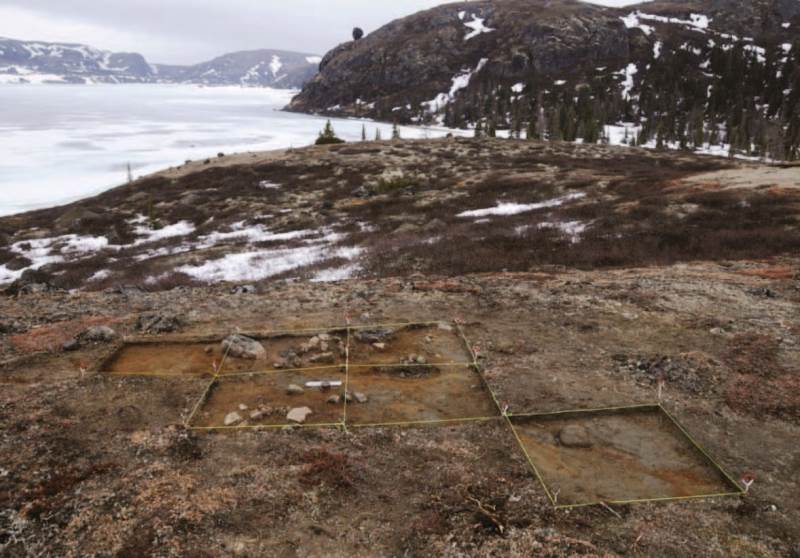
The Shak Selma Maritime Archaic site on Kamestastin Lake. The excavation of this site will be part of Chelsee's Ph.D.

The Shak Selma Maritime Archaic site on Kamestastin Lake. The excavation of this site will be part of Chelsee’s Ph.D.

The Dirt on Your Directors: Scott Neilsen

Since the current Board of the NLAS is also its first formal Board and there is an AGM coming up in November where many of these people will be replaced, we thought it would be interesting to get each board member to answer a series of questions about themselves and their role with the NLAS. Over the next few weeks we will post each board members response to those questions. Up next is Dr. Scott Neilsen, a member of the Board of Directors and the Chair of the Awards Committee.

How did you get interested in Archaeology?

  • I’m of an age that I saw “Raiders of the Lost Ark” when it was originally released in theatres. The day after the movie my buddy Derek and I went to the library and checked out a book called “Archaeology”. When we got home we opened it with anticipation of learning all the things we need to become archaeologists. Somewhere near the bottom of the first paragraph we read that it would require 7 extra years of school after high school. We promptly closed the book and went outside to play. About 15 years later I got a job as an archaeology assistant on a pipeline project in the Maritimes because I had some university courses in “Native Studies”. It’s been 19 years since that first job and I’ve just graduated with a PhD in Archaeology. My younger self thinks I’m nuts for going to school that long, but my older self is pretty happy with how it all worked out.

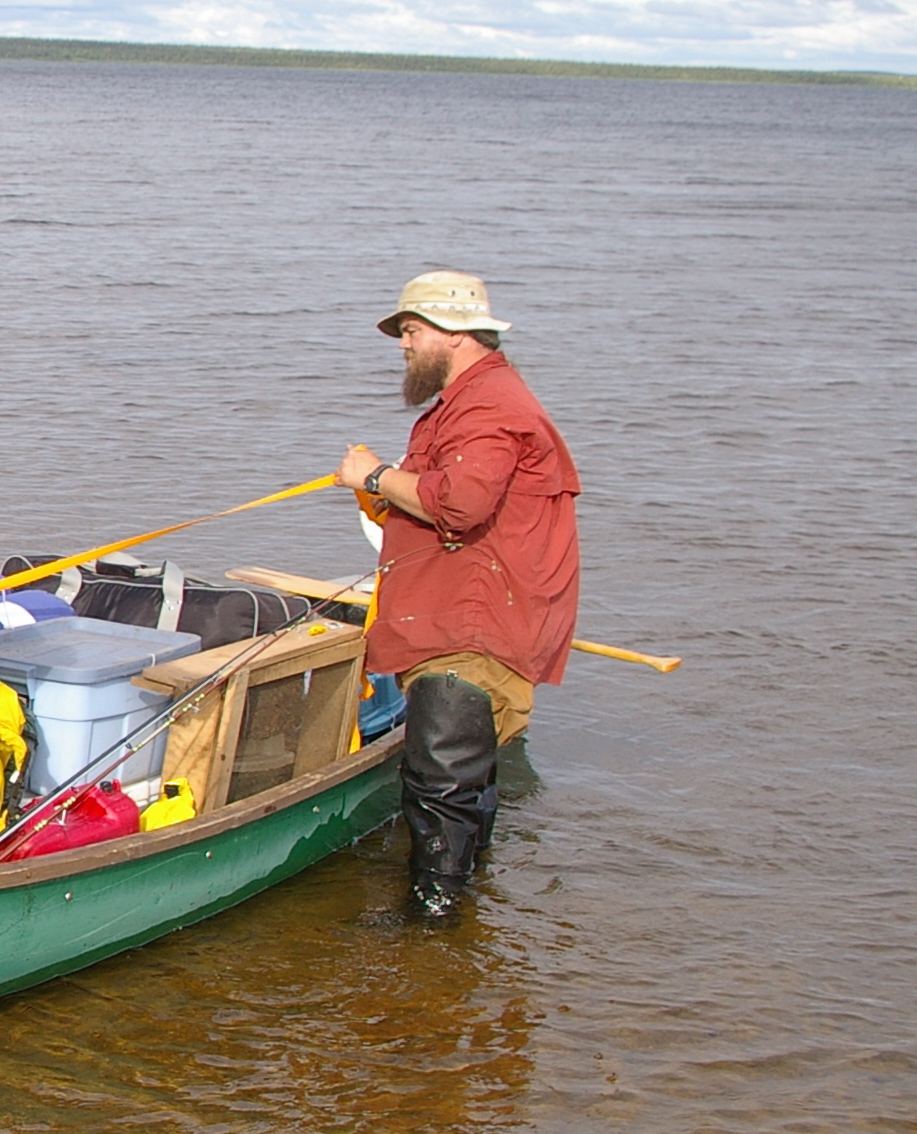
    Dr. Neilsen loading a canoe at Ashuanipi Lake. (Todd Kristensen)

    Dr. Neilsen loading a canoe at Ashuanipi Lake. (Todd Kristensen)

Do you have a favourite site or artifact from the Province?

  • Currently my favorite site is a portage trail that runs between Riviere aux Esquimaux and the Kapitagas Channel, at the southern extent of Ashuanipi, in western Labrador. There isn’t a lot of material remains present on the portage, but the trail itself is an artifact of Innu movements between the Quebec North Shore and the interior of the Quebec-Labrador peninsula. I like this site because it forces me to think about aspects of the archaeological record, other than artifacts and small site features.

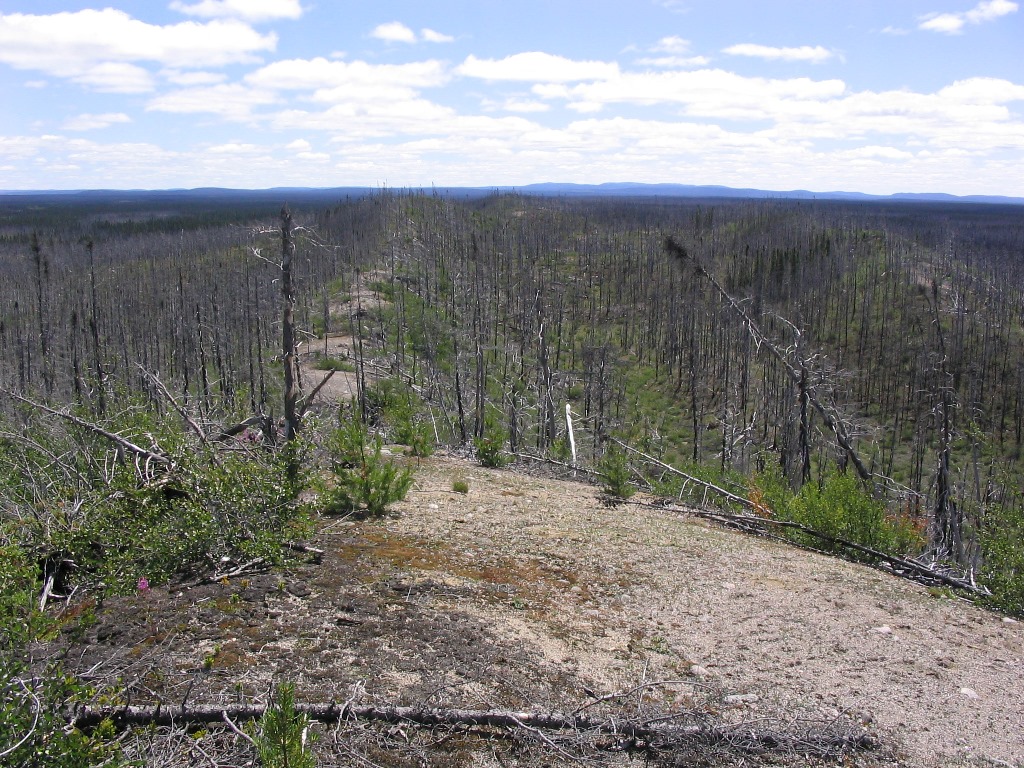
    Kapitagas Channel portage trail (Neilsen)

    Kapitagas Channel portage trail (Neilsen)

If you could give yourself one piece of advice to help you along your archaeology path, what would it be?

  • There are many things I could say here – such as don’t get bug spray on the artifact bags, learn what poison ivy looks like, and don’t open a new excavation unit on the last day of excavation – but I think the most important piece of advice I would give to a younger me is “listen to the locals, chances are they know where you should start looking”.

What made you want to get involved with the NLAS?

  • Who wouldn’t want to be involved in a society that has a wine bottle and a harpoon head for a logo; how cool is that!
    Seriously though, I felt that getting involved with the NLAS would provide an opportunity to work with like-minded people to spread the word about the deep, and significant history of Labrador and Newfoundland, and to learn more about that deep history myself. So far I have not been disappointed.